Choose your site:
 

Ice & Freezing Rain Sensors

Freezing rain glazing tree branches

What is Freezing Rain?

Freezing rain occurs when rain falls through a layer of very cold air near to the surface supercooling the water droplets which freeze instantly upon contact with the ground or any other surface at or below freezing. This forms an icy coating called a glaze which builds up as subsequent droplets land. The ice quickly adds weight and forms a sheet of  tractionless ice. A major incidence of freezing rain is often referred to as an ice storm.

Ice storms damage cables, pylons and wind turbines, cause considerable problems for terrestrial transport such as railways and roads and introduces significant risk to aircraft operations. Freezing rain also brings down trees & breaks off large branches causing further disruption.

What Sensors Are Available?:

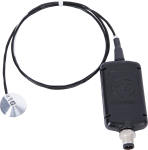
0871LH1 Freezing Rain Sensor

This compact and low powered sensor is designed to detect ground based freezing rain conditions.....more

0872E3 Ice Detection Sensor

Measures the intensity and duration of ice storms and detects ice accumulations as low as 0.13mm.....more

Typical Applications:

  • Wind Energy Production - the extra weight of ice on turbine blades reduces the power output and puts strain on the gears, uneven icing can cause an inbalance in blade rotation. There is also a real danger of ice shearing from blades at high speed.
  • Energy Transport - detecting ice build up on power cables and pylons where the added weight can bring cables down or break connections causing power outages
  • Terrestrial Transport - Roads and railways are obviously affected by icing due to the virtually friction free surface cuased by the glazing but cable cars, ski lifts and funicular railways all face serious problems during an ice storm.
  • Telecommunications - transmission towers, and telephone lines are badly affected by icing with the extra weight capable of bringing down cables.
  • Meteorological Field Measurement Integrity - many instruments can give erroneous measurements if iced so an ice detector can warn of potential reading errors.
  • Aviation - airports are particularly vulnerable to icing problems which cause a serious safety issue especially during take off and landing. De-icing of planes is necessary during freezing rain and icing conditions as the glazing can reshape an aircraft's resistance profile affecting its flight capabilities.

Bookmark and Share Follow campbellsci_eu on Twitter Follow us on Facebook

Page:2085
© Campbell Scientific 2010Home | About Us | News & Events | Quality & Reliability | Privacy & Terms | Contact Us | Site Map