Visibility & Present Weather Sensor
The new PWS100 determines precipitation and visibility parameters for automated weather stations including road, marine and airports.
Using a novel optical system and a laser based light source a structured detection volume is formed, which is used to accurately measure the velocity and size of falling precipitation. The use of two separate detectors and laser Doppler anemometry techniques improve upon current present weather sensors and optical distrometers with the PWS100 capable of accurately determining individual particle velocity and size to within ±5%.
Fuzzy logic algorithms, across multiple data tables, are used to classify the particles into type such as rain, hail, snow and so on. Using all of the available parameters including the structure of the observed signal, which differs significantly for liquid and solid precipitation types, helps to prevent erroneous classifications sometimes observed in present weather sensors which rely on a single data table.
Drop Size Distribution
Drop size distributions can be obtained from the particle size information over a user defined period of time. Also precipitation rate and accumulation values can be calculated automatically, negating the need for further precipitation measurement devices at the station.
Visibility
The PWS100 reports MOR (Meteorological Optical Range) visibility between 0 and 20,000 m.
Data Output
Data output parameters can be selected by the user with options including WMO present weather codes or raw histogram data.
Sensor Calibration
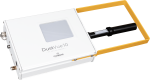
Calibration of the sensor can be accurately checked in the field with an automatic calibration fixture and the unit re-calibrated via pc connection.
Viewing Software
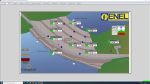
The PWS100 is shipped with viewing software which allows remote access to the sensor and presents the data in graphical and tabular data - click for futher details on the PWS100 viewer